Asif Zaman Rizvi
Uttar Pradesh has always been the nerve centre of Indian politics. The road to Delhi’s power corridors, it is often said, runs through Lucknow — not as a mere saying, but as a political truth proven over decades. The state’s socio-political churn has shaped national discourse time and again. For long, however, Uttar Pradesh symbolised a volatile mix of riots, mistrust, insecurity, and vote-bank politics. For many Muslims, politics meant one thing — which party offered token appeasement and who eventually gained power. According to the National Crime Records Bureau (NCRB), over 364 communal incidents were recorded between 2012 and 2017, resulting in numerous deaths and widespread fear. The decade deepened the sense of alienation and vulnerability among minorities.
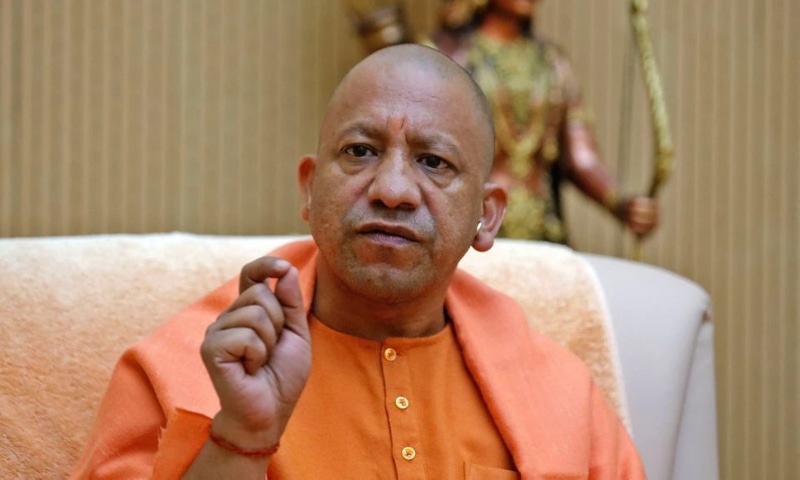
But in 2017, when Yogi Adityanath assumed office as Chief Minister, Uttar Pradesh embarked on an altogether different political and social chapter. The initial years were marked by uncertainty and suspicion among the Muslim community, but over the past eight years (2017–2025), this perception has undergone a profound transformation. The state’s political landscape today stands redefined — where once stood walls of distrust, there now rests a foundation of cautious but growing confidence.
Perhaps the most remarkable transformation under Yogi’s governance has been the emergence of a riot-free Uttar Pradesh. Between 2017 and 2025, the state recorded no major communal riot — a feat almost unimaginable a decade ago. This unprecedented stability has been the cornerstone of growing trust among Muslims. Strong law and order, swift police response, and administrative accountability have made citizens feel safer than at any point in the last three decades.
The message has been subtle yet clear: governance under Yogi Adityanath is not about appeasement or fear, but about fairness and firmness. On the development front, the government’s Direct Benefit Transfer (DBT) system has dismantled the deep-rooted network of intermediaries and middlemen that once plagued welfare schemes. Under the Pradhan Mantri Awas Yojana, Uttar Pradesh alone has seen the construction of over 3.7 million houses, many of which went to Muslim families. Similarly, the Ujjwala Yojana distributed 1.7 crore LPG connections, with lakhs of Muslim women beneficiaries. In the education sector, 11,310 minority students in Prayagraj district alone received ₹6.79 crore in scholarships during 2024–25. Across the state, more than 20 million minority students have benefited from state and central scholarship programmes.
These are not mere statistics — they are indicators of inclusion at work. For the first time in decades, the Muslim community in Uttar Pradesh is seeing governance that touches real lives rather than offering symbolic gestures. The change is not limited to governance — it reflects in the aspirations of Muslim youth as well. The earlier focus on emotional and identity-driven politics has gradually shifted toward education, entrepreneurship, and employment.
Under the Startup India and MSME initiatives, Uttar Pradesh has created around 1.6 crore new jobs, with a substantial portion being availed by minority youth. Muslim entrepreneurs are increasingly turning toward self-employment and small-scale industries, redefining their role from being passive participants in political rhetoric to active contributors in the state’s economy.
This shift marks an important political evolution: identity is giving way to opportunity, and politics is becoming a platform for participation rather than polarization. For decades, successive political parties treated Muslims as a vote bank, offering promises that seldom translated into tangible change. Yogi Adityanath’s administration broke away from this tradition with a clear policy mantra — “No appeasement, only development.”
This approach is slowly reshaping Muslim perceptions. Development schemes are reaching homes without discrimination, and a sense of fairness is beginning to replace political cynicism. The message is clear: politics can deliver dignity and progress — not merely symbolic representation.
One of the quiet revolutions of the last eight years has been the transformation in the lives of Muslim women. The abolition of Triple Talaq gave them a new sense of legal and social security. Complementary programmes such as Ujjwala Yojana, Mudra Yojana, Mission Shakti, and Skill Development initiatives have strengthened their economic independence.
Muslim women, once confined to the margins of socio-economic participation, are today stepping into the mainstream — running small enterprises, accessing digital tools, and shaping their families’ futures with newfound confidence. In education, the Madrasa Modernisation Programme stands as a landmark initiative. Out of 16,500 registered madrasas, about 8,171 have been brought under modernization. Around 21,216 teachers are now teaching modern subjects like English, Mathematics, and Science in 7,442 institutions.
This blend of tradition and technology has turned the slogan “Qur’an in one hand, computer in the other” into reality. It’s not just about literacy — it’s about equipping a generation with the tools to compete in the modern world. Beyond the numbers lies a deeper transformation — a softening of social fault lines. Communal tensions have declined, new channels of dialogue are opening, and the priorities of the Muslim community are visibly shifting toward progress and partnership. Uttar Pradesh’s political narrative is moving from the politics of appeasement to the politics of accountability.
Uttar Pradesh’s evolving model is beginning to echo beyond its borders. In the 2024 Lok Sabha elections, a section of Muslim voters displayed a positive shift towards the BJP — something unimaginable a few years ago. The impact of this transformation could ripple into the 2027 UP Assembly elections and even influence politics in states like Bihar, West Bengal, and Kerala.
The emerging message is clear: to win trust, one must deliver — not divide.
Trust cannot be built overnight; it demands time, consistency, and credibility. Over the last eight years, Yogi Adityanath’s Uttar Pradesh has demonstrated all three. From madrasa reform and educational scholarships to real job opportunities and visible peace on the streets — the signs of transformation are undeniable.
This change will not remain confined to Uttar Pradesh. It could redefine India’s national politics and the BJP’s engagement with Muslims in the years to come.
Yogi Adityanath’s Uttar Pradesh is today a case study in how political firmness, developmental inclusivity, and administrative fairness can rewrite old narratives. The “New UP” is not just a story of governance — it is the blueprint of a “New India” built on trust, opportunity, and shared progress.
Asif Zaman Rizvi