Asheer Rahman
Few issues in India’s institutional discourse have proved as enduring and polarising as the debate over transparency in electronic voting. For over two decades, the Election Commission of India (ECI) has consistently maintained that Electronic Voting Machines (EVMs) are indigenously designed, stand-alone devices that cannot be programmed to favour any candidate. Yet fragments of official communication, shifts in public documentation, and recurring field-level anomalies have sustained a parallel current of public scepticism. This widening gap between institutional assurance and citizen doubt has resurfaced sharply after the 2024 general election, where discrepancies between polled and counted votes were reported across more than 500 constituencies, without a comprehensive technical reconciliation from the Commission.
A close reading of publicly available material helps trace the roots of this unease. On its current website, eci.gov.in, the Commission defines “tampering” in categorical terms. While acknowledging that EVMs, like all electronic devices, may suffer failures, it asserts that malfunctioning in a manner that favours any candidate is not possible because of multiple safeguards embedded in the machine’s design. This position has remained consistent in official statements. However, archival records indicate that the technical narrative presented to the public has not always been framed in exactly the same way.
A Press Information Bureau (PIB) clarification issued in April 2017 addressed allegations arising from irregularities in local body elections. It explained that elections to municipal and panchayat institutions fall under the jurisdiction of State Election Commissions (SECs), which procure and manage their own EVMs. These machines are distinct from those deployed by the Election Commission of India. While the clarification was technically accurate, the distinction between State-managed and nationally managed systems has never been clearly internalised by the broader public. Consequently, incidents involving SEC-managed machines frequently spill over into distrust of the national electoral apparatus.
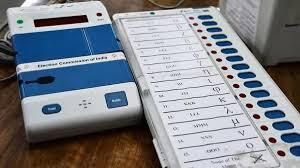
More revealing is the evolution of the Commission’s own explanatory material. An archived version of the ECI website from 2017 contained a detailed response explaining how the Balloting Unit accommodates varying numbers of candidates. Although the unit is physically equipped with sixteen buttons, unused slots are masked and electronically disabled based on the number of contestants in a constituency. This explanation implicitly acknowledged that the machine’s internal behaviour is governed by predefined configuration settings. In current versions of the website, this clarification has been removed without comment. The deletion of a technical explanation does not, by itself, imply wrongdoing, but the absence of any explanation for its removal contributes to a growing transparency deficit.
These internal configuration parameters assume greater significance when viewed alongside recurring differences between votes polled and votes counted. In the 2019 general election, such mismatches were reported in more than 350 constituencies. In 2024, the number rose beyond 530. Individually, these differences often amount to only a few votes per machine. Collectively, across a system comprising more than a million machines, they raise legitimate questions about aggregation, reconciliation, and disclosure.
At the machine level, vote recording is governed by counters, candidate-slot activation limits, and internal thresholds that ensure unused options remain inactive. When results from multiple machines are consolidated at the constituency level, minor variations can arise through the interaction of these internal settings with administrative aggregation processes. Small numerical shifts, when repeated consistently, can produce measurable differences between totals reported at different stages. The central issue here is not whether such variations are malicious, but whether the Commission has provided a sufficiently detailed public account of how these internal mechanisms interact with counting and reporting protocols.
Field incidents illustrate how quickly such explanatory gaps translate into public anxiety. During the 2024 Lok Sabha election in Kasaragod, Kerala, voting was briefly delayed after a mock poll produced an unexpected mismatch. Although officials later attributed the episode to a procedural error, early reports suggested a candidate-specific skew, amplifying suspicion. In high-trust electoral environments, even transient technical ambiguities can have a disproportionate impact if they are not addressed through immediate and precise disclosure.
The debate has further intensified following the 2025 legislative elections in Bihar and Maharashtra. In both States, observers noted instances where winning candidates from the same party recorded identical or near-identical vote totals across different constituencies. Such convergence is not, in itself, evidence of impropriety. In systems where machines operate under uniform configurations and are deployed in constituencies with comparable electorate sizes, aggregate figures can align closely. Yet without publicly available explanations linking machine-level behaviour, aggregation logic, and final tallies, these patterns invite speculation that institutions would do well to pre-empt rather than dismiss.
Bihar has also brought a different but related issue into focus. During the recent legislative election, publicly released voter-roll figures did not, in some cases, reconcile cleanly with the number of votes reported as polled or with the published turnout percentages. Even allowing for last-minute roll updates, deletions, or administrative corrections, the absence of a consolidated explanation has raised questions. This discrepancy does not directly implicate EVM functioning, but it underscores the same structural weakness: multiple data systems operating in parallel without a transparent, end-to-end reconciliation framework.
Voter rolls, turnout percentages, and machine-level counts are generated through distinct administrative processes, often on different timelines. When these figures are released independently, without a unified explanatory account, numerical inconsistencies appear as anomalies rather than as outcomes of documented procedural steps. As with internal machine configurations, the problem is not necessarily the existence of adjustable parameters or updates, but the lack of clarity about when and how they are applied.
Taken together, these developments point to a single unresolved issue. India’s electoral system relies on technically sophisticated instruments and complex administrative processes, but its public communication has not kept pace with that complexity. Internal configuration parameters, aggregation logic, and reconciliation protocols are normal features of large-scale elections. They become problematic only when they are insufficiently explained.
A nationwide practice of counting 100 per cent of VVPAT slips would address this gap directly. It would provide a verifiable, voter-visible bridge between machine-recorded votes and declared outcomes. More importantly, it would shift the burden of trust away from institutional assertion and towards empirical confirmation.
The EVM debate is not a partisan contest. It is an exercise in democratic housekeeping. For an election system admired globally for its scale and efficiency, credibility rests not only on mechanical integrity but also on explanatory completeness. By clarifying the evolution of its documentation, publicly reconciling polled and counted figures, and embracing full verification where feasible, the Election Commission can decisively close the clarification gap. In doing so, it would reinforce the foundational democratic principle that legitimacy flows not merely from being correct, but from being seen to be correct.

Asheer Rahman
Author is an accomplished entrepreneur and impact investing expert with a proven record in venture capital, ESG Investing, and sustainable energy.