By Ritesh Sinha
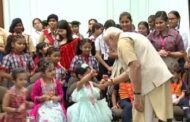
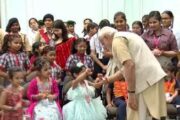
Imphal: Prime Minister Narendra Modi undertook his first visit to Manipur since the outbreak of ethnic violence in May 2023, pledging to transform the state into a “symbol of peace and prosperity.” He urged warring communities to return to the mainstream and assured that the Centre would stand firmly with them. The Prime Minister also inaugurated and laid foundation stones for development projects worth ₹8,500 crore.
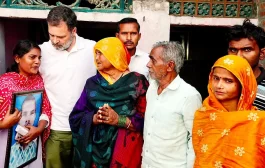
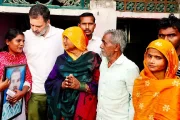
The visit, however, has triggered political unrest within the already divided Manipur Congress. State Congress president K. Meghachandra alleged that the Prime Minister had abandoned Manipur for 28 months and only visited under pressure from Leader of Opposition Rahul Gandhi. He further dismissed Modi’s announcements as repackaged projects initiated under the Congress regime, calling the visit a mere attempt to deflect Rahul Gandhi’s consistent criticism of the government in Parliament. Gandhi himself, however, welcomed the Prime Minister’s delayed visit.
At the heart of the crisis lies state in-charge MP Saptagiri Ulaka, who is being criticized by party workers as ineffective and disconnected from ground realities. A former Infosys project manager in the United States, Ulaka is accused of lacking organizational acumen and avoiding direct engagement in Manipur. His appointment is widely seen as a product of his close ties with Congress president Mallikarjun Kharge and Kharge’s minister son. Insiders allege that such leadership choices have weakened the Congress across sensitive northeastern states.
Veteran leader and former Chief Minister Okram Ibobi Singh, meanwhile, continues to wield influence within the party, often guiding the in-charge while remaining largely silent in the Assembly. Singh is also accused of prioritizing his son’s political future over strengthening the party. Under his shadow, the state unit has been reduced to symbolic struggles led mainly by Meghachandra and his close associates.
Frontal organizations such as NSUI, Youth Congress, Mahila Congress, Minority and OBC wings are virtually inactive, with most leaders attempting to manage affairs over telephone calls. Only the Kisan Congress, under Sukhvir Singh Khaira, has made visible efforts on the ground.
Criticism has also mounted against Congress president Mallikarjun Kharge, who has been accused of focusing more on preserving his position than expanding the party’s parliamentary strength. Party insiders recall that Kharge was elevated to the presidency ahead of the Karnataka elections, sidelining Pawan Bansal, primarily due to his Dalit identity and regional background.
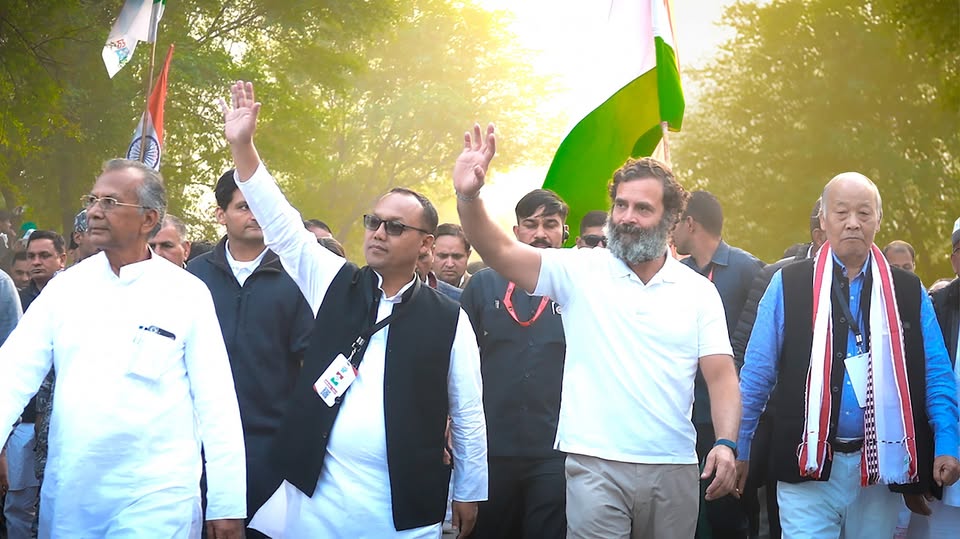
Buoyed initially by the momentum of Rahul Gandhi’s padyatra, Kharge is said to have harbored prime ministerial ambitions. However, his political overreach has backfired, with critics likening his trajectory to a game of snakes and ladders—falling from 99 straight back to zero. Today, his reliance on ineffective in-charges and reluctance to strengthen the organization are seen as key reasons behind the Congress’s continuing decline in the Northeast.
Ritesh Sinha