Before independence was Congress’s Mohammad Yunus; after independence came Abdul Ghafoor
By Ritesh Sinha
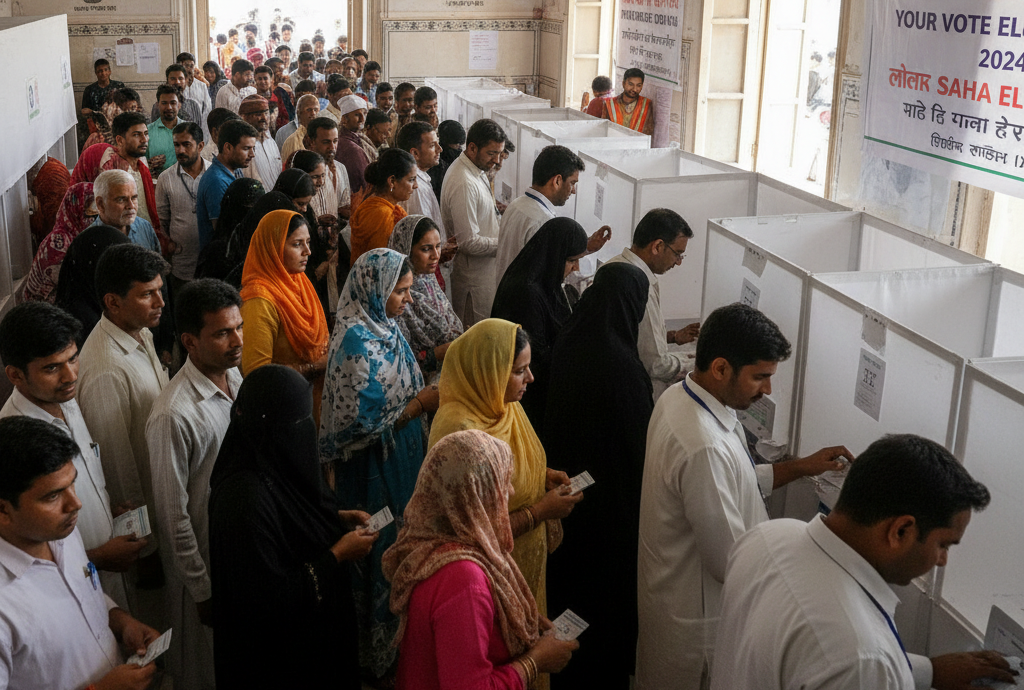
Churning continues among minority Muslim voters in Bihar. These voters have so far kept their “mann ki baat” (inner thoughts) to themselves against the RJD and Congress. After the formation of Bihar as a state, Mohammad Yunus, who served as the province’s first Prime Minister in 1936–37 under the pre-independence provincial government, had represented the Congress government. In that era, the heads of provincial governments were called Prime Ministers — a title equivalent to today’s Chief Ministers. India’s first national Prime Minister emerged after independence, and the heads of the provinces were henceforth called Chief Ministers.At the time, a politically aware section of the Muslim community migrated to Pakistan during the partition.
The communal riots that followed made India’s remaining Muslims politically cautious and subdued, a trend that visibly affected the nation’s political landscape.It’s important to recall that the demand for Pakistan had first risen prominently from Bihar and Uttar Pradesh, which became major reasons for partition. After the division, the Congress party strategically linked the Indian Muslim population to its politics through leaders like Maulana Azad and Jawaharlal Nehru. By expanding its secular politics, the Congress gave several Muslim figures significant representation in state and central governments. It succeeded in electing members of the community even to the highest posts — Presidents and Vice Presidents of India.
In Bihar, Abdul Ghafoor was entrusted with the reins of the state. Similarly, in other states, Anwara Taimur in Assam, Mir Qasim and Ghulam Nabi Azad in Jammu and Kashmir, Barkatullah in Rajasthan, and Abdul Rahman Antulay in Maharashtra became Chief Ministers. The Congress also supported leaders like Farooq Abdullah, Omar Abdullah, and Mehbooba Mufti in assuming chief ministerships.During the 1990s, after the Babri Masjid incident, regional parties began to dominate national politics. These parties, while exploiting the temple-versus-mosque narrative, discredited the Congress among minorities and captured its vote base.
Parties like SP, BSP, National Conference, and in Bihar, RJD, Samata Party, and later JD(U), secured Muslim votes under the banner of “social justice.” For more than 35 years, such parties have ruled based on this formula. At the same time, they sent individuals from non-political backgrounds — paan sellers, singers, kebab makers, cooks — to legislative assemblies and Parliament merely for symbolic representation. Wearing skullcaps and draping special scarves became political props to attract votes.However, the section of the Muslim community capable of genuine leadership was deceived.
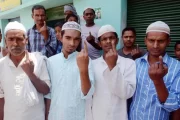
Even today, dignified and uncontroversial minority faces like Abdul Bari Siddiqui — respected across communities — have been reduced to mere ministers. In contrast, a small ally of the RJD today enjoys a “VIP” status, while the legitimate 18 percent Muslim claim to representation has been sidelined. Voting for the first phase in Bihar will close on November 4. The RJD hopes to rekindle old emotional issues among Muslims to regain votes while continuing its policy of keeping leadership confined within its own family, showing minorities their “place.”
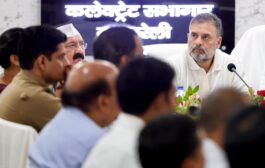
Congress is equally complicit in this Mahagathbandhan game.The Congress, which claims to speak big about minority rights, was notably absent from the press conference where crucial questions about minority representation were to be raised. As the second-largest coalition partner after the RJD, it talks about the Deputy Chief Minister’s post but remains silent on Muslim issues — a silence that exposes its intentions. Meanwhile, a coterie of entertainers and self-proclaimed community figures dominates the Congress’s minority cell.In the last assembly election,
Asaduddin Owaisi made waves by winning five seats in the Seemanchal region, backed by young minorities disillusioned by the so-called secular parties that have long humiliated them. Since then, resentment against those parties has deepened. Although not all among the minority vote base reject secular politics, many now see hope in Jan Suraaj. Those not aligning with Owaisi are likely to turn toward Jan Suraaj. Thus, both RJD and Mahagathbandhan’s electoral dreams may soon shatter.
Owaisi has fielded strong candidates in constituencies with a secular image that appeal to Hindu voters as well. The AIMIM has strategically identified 32 such seats where Muslim voters play a decisive role. These votes earlier went one-sidedly to RJD and Mahagathbandhan, but now the contest has turned fierce.In a damage-control move, RJD has fielded Osama, son of the late strongman Shahabuddin, by cutting the ticket of a sitting MLA. Earlier, after noticing Shahabuddin’s growing clout, RJD had distanced itself from his family. Now, in the battle to stop the BJP among Muslims,
Jan Suraaj has emerged as a potent alternative. For the past three years, its leaders have campaigned across Bihar — including among minorities — attacking the Nitish government on local issues and promising a credible option.This combined effort by Owaisi and Jan Suraaj is enough to disrupt RJD and Congress’s calculations. It is shaping into a new center of social and ideological polarization among minorities. The RJD’s arrogant leadership, still unwilling to give Muslims their rightful share of power, may face serious consequences in this election.
Ritesh Sinha