Photo courtesy: Social Media
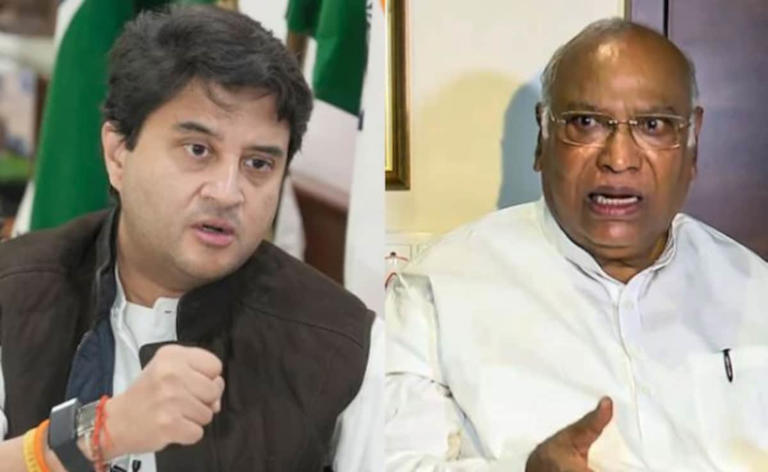
New Delhi, July 2, 2025 — Union Minister Jyotiraditya Scindia on Tuesday delivered a sharp retort to Congress President Mallikarjun Kharge’s criticism of the Digital India initiative, suggesting that Kharge should “try a basic web search” before questioning the government’s flagship digital transformation campaign.
Speaking at a press interaction, Scindia dismissed Kharge’s recent remarks wherein the Congress veteran allegedly termed Digital India a “gimmick” and questioned its effectiveness in bridging the digital divide.
“Perhaps Mr. Kharge hasn’t kept pace with the times. A simple web search would show him how Digital India has revolutionized service delivery, empowered rural citizens with access to e-governance, and driven India’s global digital economy leadership,” Scindia said.
He went on to list several achievements under the Digital India mission, including the Unified Payments Interface (UPI), the expansion of broadband connectivity in rural areas, and platforms like DigiLocker and CoWIN that played a pivotal role during the pandemic.
“From digital health IDs to real-time digital payments crossing billions of transactions, India is not just part of the digital revolution — it is leading it,” Scindia added.
His comments come amidst a broader war of words between the BJP and Congress, as both parties ramp up rhetoric ahead of the upcoming state elections. The Congress party, while acknowledging the importance of digital infrastructure, has repeatedly raised concerns over data privacy, digital surveillance, and accessibility gaps in underserved regions.
Meanwhile, BJP leaders have positioned the Digital India campaign as one of the key pillars of Prime Minister Narendra Modi’s governance model, aimed at fostering transparency, efficiency, and innovation.
Scindia’s pointed remark — “try a basic web search” — quickly went viral on social media, with BJP supporters hailing it as a “digital era mic-drop moment” and Congress workers accusing the minister of avoiding substantive debate.
As the political heat rises, it’s clear that digital governance — and its interpretation — is set to be a central issue in the upcoming electoral discourse.