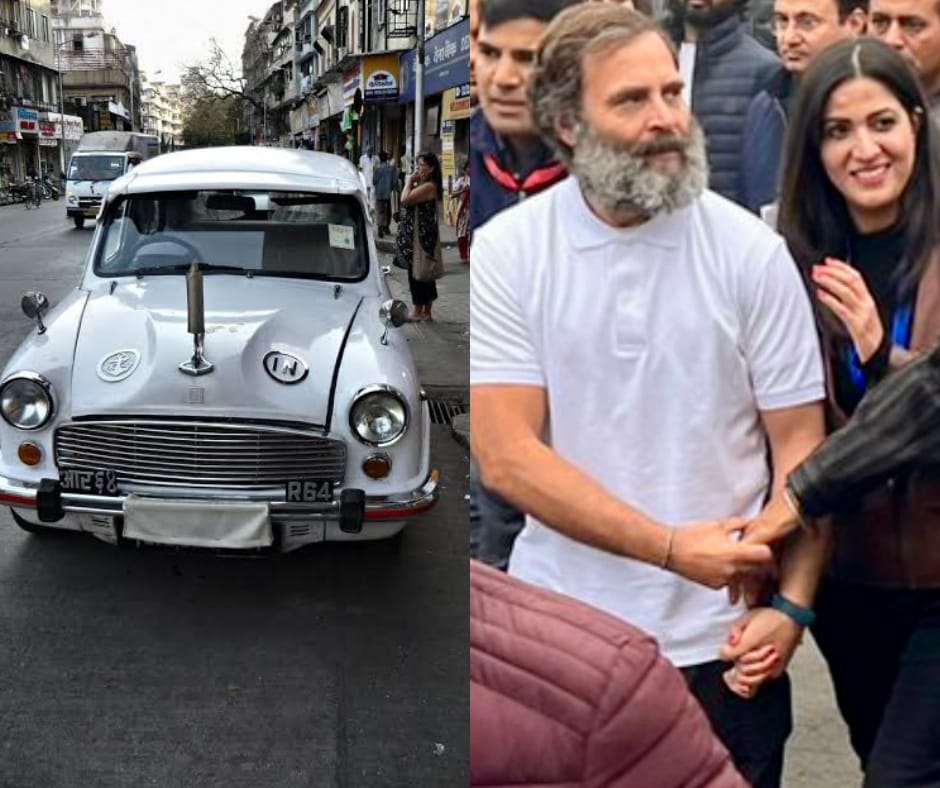
In May 2014, the final Hindustan Ambassador left the Uttarpara factory in West Bengal, and with it, an era came to a quiet, dignified end. More than the production of a car had ceased – it was the silent curtain call of an age, majestic in its silence, deep in its loss. Once celebrated as the “King of Indian Roads,” the Ambassador had become a byword for power, durability, and the bureaucracy that defined post-Independence India. Yet, with only two units being sold in 2014, its sixty-year-old journey came to an unassuming end.
Interestingly, in the same year, another milestone transition was seen. Indian National Congress, the party that had taken India to independence, authored its Constitution, and ruled it for most of its contemporary history, faced its worst-ever electoral defeat. The BJP, under Narendra Modi’s leadership, emerged with an unprecedented mandate, pushing Congress to the political fringes.
The Congress and the Ambassador were more than a party and a car. They were an era, a symbol of stability, simplicity, and authority. The Ambassador, inspired by the British Morris Oxford, was Indian in soul and spirit, used by ministers, civil servants, and the middle class. So was the Congress Party a symbol of stability, governance, and ambition in India’s first few decades after freedom.
But as the automobile industry grew, introducing more efficient, technologically advanced, and streamlined options, the Ambassador started to look out of place. The Congress Party also started to lose touch with the people it once claimed to represent, mired in corruption, absence of internal democracy, and disconnect from ground realities.
The ascension of Narendra Modi in 2014 was not just a political realignment – it was a tectonic shift. As the Japanese and Korean automakers displaced the Ambassador, Modi’s acutous, aggressive, and digitally adept politics caught the Congress napping. The previous model of leadership, closed-off, hierarchical, and elitist, was suddenly out of sync with the new India.
Today, almost 10,000 Ambassador cars continue to cruise Indian roads, many as Kolkata cabs or vintage relics. Others are being retro-fitted with electric motors, attracting attention and wonder. The Congress itself is quietly making a comeback, hinting at a bid to go back to the polls and to voices.
For Congress, the road ahead is neither brief nor simple, but it can be done. To regain relevance, the party has to construct a bold, expansive vision of tomorrow, taking difficult decisions such as transparent leadership, internal revival, and offering alternatives rather than opposition.
Both the Ambassador and the Congress have rich legacies, but legacy in itself is not a plan. It’s a beginning, not an end. Legacy has to be transformed into energy, relevance, and action. For the Ambassador, that could be a dramatic re-entry into the electric vehicle space. For the Congress, that is to speak the language of India today – digital, diverse, and assertive – yet retaining the values of secularism, democracy, and inclusiveness.
2014 was the end of an era. In 2025, the Ambassador and the Congress stand at the juncture of history and rebirth. Can they surge again, not as icons of bygone days, but as tools of a new India? If they can, they will have to win their place not as relics, but as realities. Because legacy is not a destination – it is a leap forward.
Ali Hasan