By Ali Hasan |
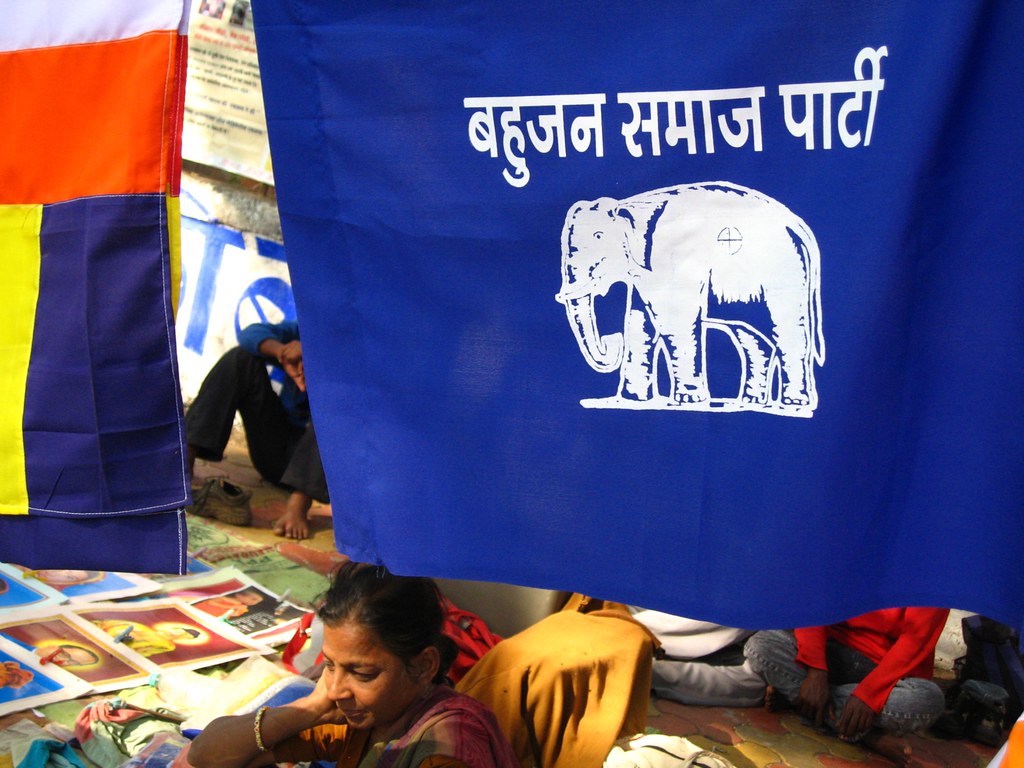
Once a political giant shaped by Dalit assertion and social strategy, the Bahujan Samaj Party (BSP) now struggles to stay relevant in Uttar Pradesh’s political scene. With Assembly elections approaching, the party that once dominated the state faces not only internal decline but also a measured loss of its support.
The blue elephant, once a powerful symbol for millions of Bahujans, now appears stuck as emerging parties like the Azad Samaj Party (Kanshi Ram) start to draw on the same emotional and electoral support that BSP once controlled.
The Data Story: Where the Elephant Stumbled
Various electoral data sets and surveys from the past decade reveal a troubling trend for BSP:
Vote Share Decline: In the 2022 Uttar Pradesh Assembly elections, BSP’s vote share fell to just 12.8%, a significant drop from 22.2% in 2017 and 26.1% in 2012.
Seat Tally Collapse: From holding 80 Assembly seats in 2012, BSP was reduced to just 1 seat in 2022, marking its worst performance ever.
Dalit Voter Drift: Surveys from CSDS and Lokniti show a notable shift of Dalit youth toward newer options, including the Azad Samaj Party and even the Congress and Samajwadi Party in some areas.
Lack of Alliance Strategy: While other parties have adjusted to coalition politics, BSP’s approach of going it alone has hurt it in a multi-party environment.
This trend of political marginalization isn’t coincidental; it stems from long-standing strategic inflexibility, disconnected leadership, and Mayawati’s centralized management style, which has alienated both party members and allies.
Azad Samaj Party: The New Bahujan Voice
As BSP’s power diminishes, the Azad Samaj Party (Kanshi Ram), led by Advocate Chandrashekhar Azad, is gaining traction, especially among young people, Muslims, and marginalized workers.
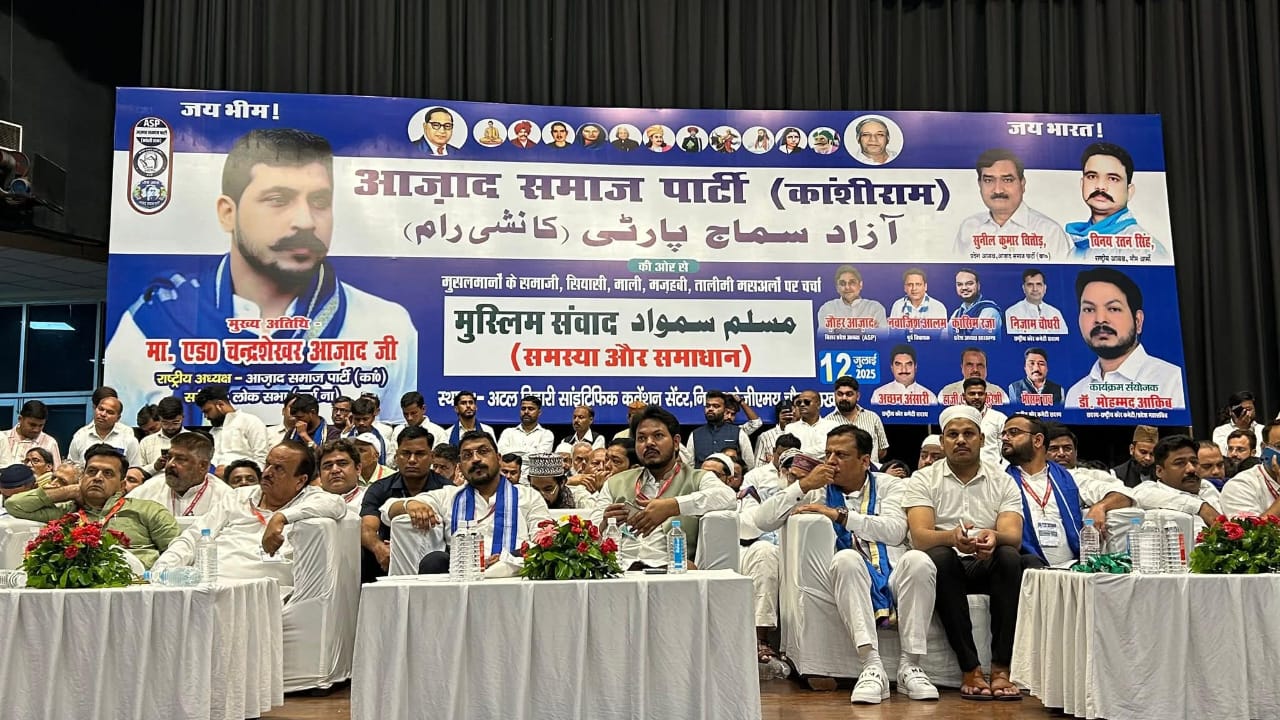
On Saturday, July 12, the party held an important event called “Muslim Dialogue: Issues and Solutions” at the Atal Bihari Vajpayee Scientific Convention Center in Lucknow. The gathering wasn’t just a token outreach; it focused on the socio-economic issues facing Muslims, a strategy largely missing from BSP’s current agenda.
What Made This Event Stand Out?
Diverse Participation: Artisans, daily-wage workers, teachers, and NGO staff from Muslim-majority areas across UP attended in large numbers.
Occupational Focus: The event addressed real concerns like job security, protection from communal violence, and rising attacks on Waqf properties.
Political Messaging with Depth: Chandrashekhar Azad didn’t just promise electoral support; he challenged existing narratives, stating:
“The attack on Waqf is just the beginning—Jains, Christians, everyone is at risk. Kanwar Yatra blocks roads for a month, and it’s celebrated. But one step onto the street during Eid, and the police are deployed.”
This framing of Muslim rights through the lens of constitutional justice, rather than appeasement, distinguishes it sharply from BSP’s ambiguous stance on minority issues.
Why This Spells Trouble for BSP
Chandrashekhar Azad’s approach is clear:
He aims to reclaim Kanshi Ram’s vision of Bahujan unity, now with Muslims, Dalits, and backward castes as equal partners rather than just as voting blocs.
This strategy has real significance. Field reports from Ambedkar Nagar, Saharanpur, and eastern UP indicate that BSP’s local leaders are gradually being courted and sometimes absorbed by Azad Samaj Party’s youth-led structure.
Moreover:
Digital Outreach: While BSP falls behind in tech engagement, ASP is quickly building WhatsApp groups, Instagram reels, and Facebook pages aimed at college students and first-time voters.
Issue-Based Politics: While BSP clings to old slogans, ASP addresses current issues like NEET failures, police abuse, rising hate crimes, and rural unemployment.
Alliance Potential: ASP is open to forming secular coalitions, unlike BSP, which has a history of unpredictable alliances, giving ASP an advantage in today’s coalition-focused landscape.
The Silence of BSP: A Self-Inflicted Wound?
As new forms of Dalit politics emerge, BSP’s absence from active fieldwork, refusal to decentralize its party structure, and lack of media engagement have pushed it towards political irrelevance among younger voters.
Former BSP leaders, speaking anonymously, report that grassroots meetings have decreased to mere formalities, and ideological training sessions have disappeared. In contrast, ASP’s activism, along with Chandrashekhar Azad’s public protests and arrests, have strengthened his image as a new leader in the Ambedkarite tradition.
Can the Elephant Rise Again?
If BSP does not launch a strategic revival plan soon—one that includes coalitions, engaging youth, and displaying visible leadership—it risks being eclipsed by the movements it once led.
The rise of the Azad Samaj Party, not merely as a Dalit-Muslim coalition but as a grassroots political movement, could fundamentally change Bahujan politics in UP.
In 2025, the key question will no longer be “How strong is BSP?” but “Will a new Ambedkarite movement emerge without it?”
Ali Hasan
Ali Hasan is a Lucknow based journalist